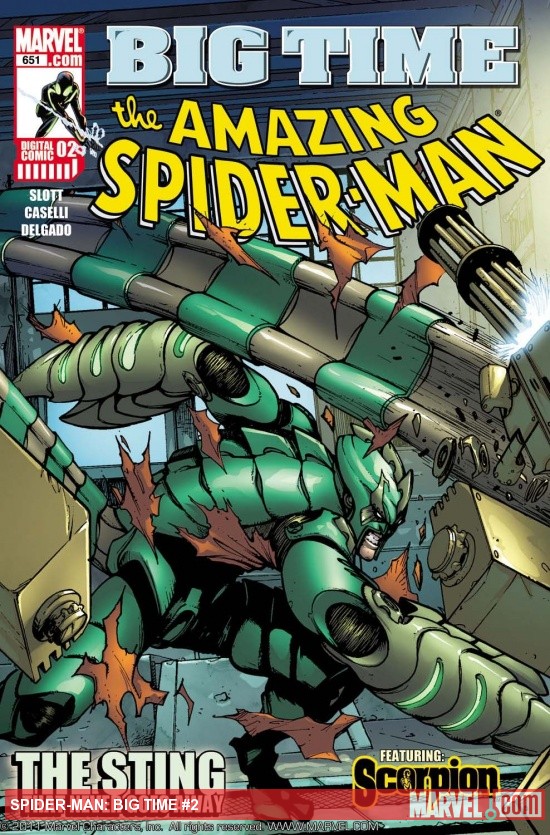
I think what I find most intriguing about graphic novels is their accessibility. Any age group can still embrace graphic novels without the sometimes judgemental social stigma that was once associated with comic strips. Now consumers can either go to their newsagent or bookseller, order online, or download an app allowing them one-tap access to hundreds of graphic novels. I for one read on my Android phone as well as ordering novels from Amazon. I think it is this tranferable nature of the graphic novel that makes them so popular and such a great starting point for the younger generation. Anthony Browne once said 'Illustrated books are for everybody at any age, not books to be left behind as we grow older' and I whole heartedly agree.
Saying that, Naming the Bones was entertaining and Welsh's syntax portrayed the grim back-alleys of Glasgow and the characters that inhabit the murky shadows. I would recommend this to anyone who fancies a casual fling with a retrospective mystery. Perhaps even a brief tour of the Shetland islands, I hear it's lovely there this time of year.
Last Saturday I took a rather early train from London Paddington to the sunny if a tad windy city of Oxford for the Sunday Times Literary Festival. OK, so admittedly the Children's Laureate Launch was aimed at children and their dedicated parents but I figured I could subtly hand my ticket in and join the mass of Jacqueline Wilson, Anne Fine, Michael Rosen and Anthony Browne fans. To an extent I was right, once I was in, I climbed the stairs in the Sheldonian Theatre to sit above the guest panel in the upper circle. The awkwardness came at the start of the day when I had to queue with around 200 children clasping Tracey Beakers and Flower Babies ready to be let in. It wasn't even the sort of event where you could sidle up to a family and pretend to be part of their clan. As soon as I so much as took a step towards the next family in line, I either got a sympathetic smile or a protective arm around a younger child. I'm not sure why that happened, I don't think I look particularly threatening and at just over 5"1 I'm hardly likely to hoist a 9 year old over my shoulder and take a high jump over the 15 foot gates. Anyway after the rather embarrassing queue I was finally in and seated and starting to wish I had got a drink before I arrived. I figured that the organised talk by four of the most talented laureates would be a real insight into the workings of a children's writer and I think I was just curious to see what made them tick. Each of them were greeted with a huge round of applause and faced their eager audience with warm smiles. So folks, here is a quick round-up of what each of the four guest speakers said:
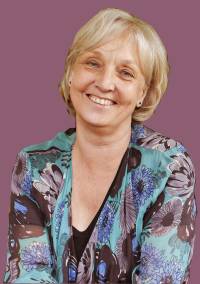
Writer of Madame Doubtfire, Flower Babies, The Jamie and Angus Stories and many, many others, Anne Fine spent her time as laureate campaigning against the age ranges set on books, claiming that the ability to read does not necessarily have a correlation to a child's age. She talked of how, like many of the other guest panellists, she was a child of Enid Blyton and learnt to read at an early age, exceeding the expectations of her primary school teachers. She raised the issue of difficult literature and suggested that if a book is hard to read, it is often the book that you will get the most out of. Apparently easy reading is not somewhere to be beached up. One thing I did find very promising from her talk was that she has found that her writing has not got better with time, she has just got better at spotting problems that are about to pounce on her - reckoning that people's best work is often the raw materials they produce early on in their career...now that does sound good!
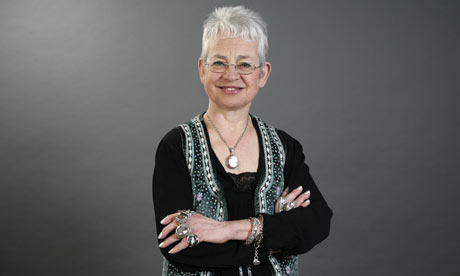
What a trooper! Poor Jacqueline Wilson had the most horrendous cold and had to stop numerous times to sip water in a vain attempt to stop her sudden bouts of coughing. Jacqueliune really held the children's attention as most of them had come to see their heroine in the flesh. She talked of her love for family stories and how as she grew up in a reasonably small family she enjoyed reading about characters with many siblings. Little Women, What Katy Did Next and Ballet Shoes were among her faves and they all came with high recommendations for the parents in the audience who were clearly scribbling down reading lists for their children. As laureate, Jacqueline backed a campaign to bring families together to read out loud to each other, something that I really benefited from as a child - I can't really imagine a house where this doesn't happen. I think it's so important to encourage children's imaginations and who can do the voice of the BFG better than your dad??
Michael Rosen was introduced as a performer and he really gave a stonking
performance.Writer of We're Going on a Bear Hunt and You're Thinking About Doughnuts, he had everyone in stitches as he told us of his brother teaching him to read parrot fashion and how he would rather not meet the Queen thank you very much. He also explained in detail how he felt about the government and how he is baffled by their love of worksheets. One thing that stuck in my head from Michael's speech was this little nugget of information that seems so obvious that I'd never really thought about it. Having a house full of books is like having two university graduates live in the house. The amount of information available to the child sky rockets and their imagination and willingness to learn is mind boggling increased. But apparently this piece of gold from the University of Nevada wasn't 'worksheet friendly' enough for the government so Michael's laureate campaign was put on the back-burner.
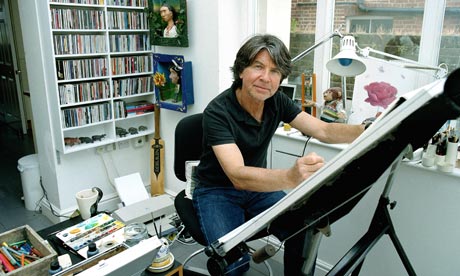
Illustrator and author Anthony Browne brought Willy the Wimp to life in fantastic drawings. Growing up reading comic books such as The Dandy and Beano, Anthony was fascinated by the power of pictures and the space between words and pictures. His campaign promotes the importance of picture books and the importance of allowing children to explore impossible worlds through picture books. Being pushed forward onto more grown-up books where their imaginations are left stranded as they fail to conjure up ice-cream streets and lollipop trees never sounds like a good idea to me.
So that's pretty much a summary of what was said, after the speeches there was a chance for questions, most of which were along the lines of 'Jacqueline Wilson what inspired you to write [enter title here] ?' And after the questions were answered and parents proudly smiled at their child's question it was time for the floor to move and the crowd surged forwards upon the four great Laureates for book signing. It was at this point that I sidled to the door and out into the lovely sunshine, hopping onto an open-top bus tour around Oxford.
Writer of Madame Doubtfire, Flower Babies, The Jamie and Angus Stories and many, many others, Anne Fine spent her time as laureate campaigning against the age ranges set on books, claiming that the ability to read does not necessarily have a correlation to a child's age. She talked of how, like many of the other guest panellists, she was a child of Enid Blyton and learnt to read at an early age, exceeding the expectations of her primary school teachers. She raised the issue of difficult literature and suggested that if a book is hard to read, it is often the book that you will get the most out of. Apparently easy reading is not somewhere to be beached up. One thing I did find very promising from her talk was that she has found that her writing has not got better with time, she has just got better at spotting problems that are about to pounce on her - reckoning that people's best work is often the raw materials they produce early on in their career...now that does sound good!
Michael Rosen was introduced as a performer and he really gave a stonking performance.Writer of We're Going on a Bear Hunt and You're Thinking About Doughnuts, he had everyone in stitches as he told us of his brother teaching him to read parrot fashion and how he would rather not meet the Queen thank you very much. He also explained in detail how he felt about the government and how he is baffled by their love of worksheets. One thing that stuck in my head from Michael's speech was this little nugget of information that seems so obvious that I'd never really thought about it. Having a house full of books is like having two university graduates live in the house. The amount of information available to the child sky rockets and their imagination and willingness to learn is mind boggling increased. But apparently this piece of gold from the University of Nevada wasn't 'worksheet friendly' enough for the government so Michael's laureate campaign was put on the back-burner.
Illustrator and author Anthony Browne brought Willy the Wimp to life in fantastic drawings. Growing up reading comic books such as The Dandy and Beano, Anthony was fascinated by the power of pictures and the space between words and pictures. His campaign promotes the importance of picture books and the importance of allowing children to explore impossible worlds through picture books. Being pushed forward onto more grown-up books where their imaginations are left stranded as they fail to conjure up ice-cream streets and lollipop trees never sounds like a good idea to me.
So that's pretty much a summary of what was said, after the speeches there was a chance for questions, most of which were along the lines of 'Jacqueline Wilson what inspired you to write [enter title here] ?' And after the questions were answered and parents proudly smiled at their child's question it was time for the floor to move and the crowd surged forwards upon the four great Laureates for book signing. It was at this point that I sidled to the door and out into the lovely sunshine, hopping onto an open-top bus tour around Oxford.
The Deer Wedding spreads its story over two generations, focusing on the hardships endured during two brutal wars and the miraculous artwork which was to be produced from such difficult times. Expanding from 1941 to 1998, Simpson uses the sensitive nature of Croatian history to nurture her character's experiences and develop a work of fiction that is both quirky and original. Set in Zagreb and Hvar, the story bounces back and forth from one generation to the next, unravelling the mystery that surrounds the protagonist's father's premature death. Dagmar makes for a modest heroine, her enthusiasm for life and her determination to clear her father's name and proclaim the truth is truly admirable. Dagmar's counterpart is the old and rather grumpy artist, Anton Fiskovic, a national treasure that shuns the limelight. A talented artist he struggles with society's sexual prejudices and retreats to his hometown, where he is haunted by the echoes of his past.
I found the optimism in this novel contagious, I won't lie, it touches on some of the darkest material I have ever read, but it is the characters' strength of heart that pushes you on to read the next chapter.
On a mild March evening members of The Society of Young Publishers met at Pushkin House, Bloomsbury Square to drink a glass of wine and to discuss the accelerated development the Russian publishing market. It was fascinating and one of those times where you are alerted to the fact that you know nothing about much, including Russian literature and the incredible path it has taken over the last 20 years.
Five guest speakers came along:
Andrew Nurnberg : Founder of Andrew Nurnberg Associates
Lynette Owen: Copyright Director of Pearson Education Ltd.
Amy Webster: International Key Accounts Manager at the London Book Fair
Amy Webster led the discussion by first explaining that the London Book Fair has held a market focus for the past 8 years and focuses on emerging economies, increasing trade links and international relations. This year the focus is of course Russia and 2012 will be focused on China, a powerful presence on the international market. Call me ignorant but I did wonder why they had chosen Russia, as the only literature I was aware of were the classics, but that was my error and their exact reason for choosing such a creative country. The London Book Fair is helping to launch 50 publishers, and 40 Russian authors onto the centre-stage of the Western market. Russian literature currently gets the least British investment and yet has so many talented authors, so the book fair seems the perfect place to showcase these talents and open up the minds of our sometimes culturally complacent audience. The long standing tradition of highly recognised works of literature has now been handed down to a fresher, energetic market and I for one will be milling around the London Book Fair and exploring the vibrant marketplace.
Although I thought I knew about the Soviet Union and its subsequent collapse in 1991, I had never considered the impact liberation had on literature and other modes of creative output. Andrew Nurnberg gave fantastic accounts of his experiences not only with the Russian government but also with the big cheeses that now run the ever-expanding industry. The State ran publishing houses that didn't agree to advances based on copies sold but on the thickness of the book: the more you wrote the more money you made. Not a great model for those that were unable to write what they wanted. Print runs were and still are limited as resources will always be expensive, but they are no longer controlled by the State. The collapse opened up the floodgates and allowed new waves of writers, publishers, editors and designers to roll around Moscow and St. Petersburg, free from censorship and finally able to publish materials they knew people would buy and cherish. However, the initial surge of interest in the industry soon subsided as people realised publishing is not the industry where you sit on mountains of gold. Only a few were left to construct the marketplace and build committees, setting the path for future generations - these people of course made mountains of gold (and will quite happily pay extortionate amounts of money to entice a best-selling yet loyal author away from their local independent publisher).
Although China is currently the biggest fish in the water, releasing 210,000 titles a year, Russia is catching up, producing no fewer than 100,000 new titles - it would seem the race is on!
There is a big problem with piracy in Russia, a threat that was touched on at the SYP Question Time. Although it doesn't seem to be a big deal over here, in Russia it is very common and mostly free, people don't want to profit from scanning in books, they just want to share the novels. A very noble thought, but not a structure the publishing industry can hope to cling to.
Lynette Owen discussed the decline in educational book sales after the Soviet collapse. The immediate reaction of many people in Russia after 1991 was to buy exciting books that
they had never before been able to read - much like a child in a sweet shop, they went nuts for fiction and abandoned their long love affair with academic books, and the industry felt this change in tides. New publishing houses didn't want to produce books that would require specialist staff and result in a slow return on investments, they wanted to produce best-sellers and fast. The international market also felt the pinch as the Russian market clamped down and revelled in its own local writers.
Now however, the tides are changing again. Russia is opening its doors to the world's trade and is beginning to pick up an interest in non-fiction textbooks, particularly economics, business management and surprisingly, self-help guides.
Further more, the luck has changed for British publishers and authors as Russia has finally updated its copyright clause. Moving from the Life+ 25 years to the more widely accepted Life+ 75 years Russia is now playing fairly.
Rosamund Bartlett gave us a fantastic insight into the mind of Anton Chekhov who has been an invaluable influence on her academic career. From a Russian degree at the University of Durham to becoming a lecturer and teaching Chekhov to her students, Rosamund explained that she came to see Chekhov not just as a Russian writer but as a great writer. Among her vast publications include the translated letters of Chekhov, his stories and a biography of both Chekhov and Tolstoy, both of which I will definitely be reading. Not only that but she told us the wonderful story of the fall and rise of Chekhov's home in Yalta.
After the collapse of the Soviet Union, Yalta was absorbed by the Ukrainian boundaries, and the once government-funded house and museum came under disrepair as the Ukrainian government turned its back on the cornerstone of Russian literature. Writing his biography, she visited the house and was devastated to see it had fallen from glory, the modest house now resembled a mouldy hazard. Campaigning to save Chekhov's house has been the ambition of Rosamund for years. By hosting fund-raisers such as Chekhov Anniversary Readings at Hampstead Heath and by finally receiving backing from the Ukrainian government, Rosamund Bartlett has been able to see Chekhov's house slowly but surely return to the author's home.
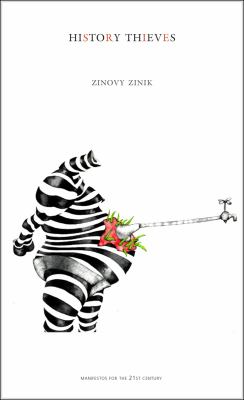
Our last and by no means least, guest speaker was Zinovy Zinik, who raised the unexpected topic of emigration. He suggested that emigration can be used as a literary device for authors, explaining that you can only truly write about your homeland once you have left it behind. The past becomes the novel and you as the author are able to view your past with refreshed eyes. Zinovy explained that he sees himself as a Soviet citizen, yet as he left in the 1970's, trading a one-way ticket for his Soviet passport, he can no longer return to his country has it technically no longer exists. Just as, he explained he considers himself Jewish, having moved to Israel, he does not attend a synagogue or consider himself a Jew. Even more fascinating was his suggestion that identity is often a fictitious product of our minds. Our past is wrongly imposed on us as strangers ask where we originate from and what profession we trade in. Further questions were raised of Russian authors who had fled the Soviet control, are they still free to write about their homeland after so much has changed? Are they aware of the newly liberated and culturally conscientious society? Or are they burdened by their memories of Russia's past and unable to move on? Zinovy's new book The History Thieves concentrates on the assumed identities of individuals and how they make connections with the rational and irrational, reality and imaginary. Zinovy argues that fabricated memories occur when our present selves look back on our past, often in a nostalgic light recreating the past as we wish to remember it. Another book I shall have to read soon!
Well that's it for another SYP event, the countdown to the London Book Fair begins!
Five guest speakers came along:
Lynette Owen: Copyright Director of Pearson Education Ltd.
Amy Webster: International Key Accounts Manager at the London Book Fair
Zinovy Zinik: Russian-born novelist and writer of the soon to be launched History Thieves
Rosamund Bartlett: translator, lecturer and writer of Chekhov: Scenes from a Life
Although I thought I knew about the Soviet Union and its subsequent collapse in 1991, I had never considered the impact liberation had on literature and other modes of creative output. Andrew Nurnberg gave fantastic accounts of his experiences not only with the Russian government but also with the big cheeses that now run the ever-expanding industry. The State ran publishing houses that didn't agree to advances based on copies sold but on the thickness of the book: the more you wrote the more money you made. Not a great model for those that were unable to write what they wanted. Print runs were and still are limited as resources will always be expensive, but they are no longer controlled by the State. The collapse opened up the floodgates and allowed new waves of writers, publishers, editors and designers to roll around Moscow and St. Petersburg, free from censorship and finally able to publish materials they knew people would buy and cherish. However, the initial surge of interest in the industry soon subsided as people realised publishing is not the industry where you sit on mountains of gold. Only a few were left to construct the marketplace and build committees, setting the path for future generations - these people of course made mountains of gold (and will quite happily pay extortionate amounts of money to entice a best-selling yet loyal author away from their local independent publisher).
Although China is currently the biggest fish in the water, releasing 210,000 titles a year, Russia is catching up, producing no fewer than 100,000 new titles - it would seem the race is on!
There is a big problem with piracy in Russia, a threat that was touched on at the SYP Question Time. Although it doesn't seem to be a big deal over here, in Russia it is very common and mostly free, people don't want to profit from scanning in books, they just want to share the novels. A very noble thought, but not a structure the publishing industry can hope to cling to.
Lynette Owen discussed the decline in educational book sales after the Soviet collapse. The immediate reaction of many people in Russia after 1991 was to buy exciting books that
they had never before been able to read - much like a child in a sweet shop, they went nuts for fiction and abandoned their long love affair with academic books, and the industry felt this change in tides. New publishing houses didn't want to produce books that would require specialist staff and result in a slow return on investments, they wanted to produce best-sellers and fast. The international market also felt the pinch as the Russian market clamped down and revelled in its own local writers.
Now however, the tides are changing again. Russia is opening its doors to the world's trade and is beginning to pick up an interest in non-fiction textbooks, particularly economics, business management and surprisingly, self-help guides.
Further more, the luck has changed for British publishers and authors as Russia has finally updated its copyright clause. Moving from the Life+ 25 years to the more widely accepted Life+ 75 years Russia is now playing fairly.
After the collapse of the Soviet Union, Yalta was absorbed by the Ukrainian boundaries, and the once government-funded house and museum came under disrepair as the Ukrainian government turned its back on the cornerstone of Russian literature. Writing his biography, she visited the house and was devastated to see it had fallen from glory, the modest house now resembled a mouldy hazard. Campaigning to save Chekhov's house has been the ambition of Rosamund for years. By hosting fund-raisers such as Chekhov Anniversary Readings at Hampstead Heath and by finally receiving backing from the Ukrainian government, Rosamund Bartlett has been able to see Chekhov's house slowly but surely return to the author's home.
Our last and by no means least, guest speaker was Zinovy Zinik, who raised the unexpected topic of emigration. He suggested that emigration can be used as a literary device for authors, explaining that you can only truly write about your homeland once you have left it behind. The past becomes the novel and you as the author are able to view your past with refreshed eyes. Zinovy explained that he sees himself as a Soviet citizen, yet as he left in the 1970's, trading a one-way ticket for his Soviet passport, he can no longer return to his country has it technically no longer exists. Just as, he explained he considers himself Jewish, having moved to Israel, he does not attend a synagogue or consider himself a Jew. Even more fascinating was his suggestion that identity is often a fictitious product of our minds. Our past is wrongly imposed on us as strangers ask where we originate from and what profession we trade in. Further questions were raised of Russian authors who had fled the Soviet control, are they still free to write about their homeland after so much has changed? Are they aware of the newly liberated and culturally conscientious society? Or are they burdened by their memories of Russia's past and unable to move on? Zinovy's new book The History Thieves concentrates on the assumed identities of individuals and how they make connections with the rational and irrational, reality and imaginary. Zinovy argues that fabricated memories occur when our present selves look back on our past, often in a nostalgic light recreating the past as we wish to remember it. Another book I shall have to read soon!
Well that's it for another SYP event, the countdown to the London Book Fair begins!
Did I tell you, I dreamt of you the other night?
Your were standing on a creaky old sailing boat-
Like the picture we have of you at home,
You had on a dark silk scarf wrapped around your hair,
And a dragonfly brooch pinned to your lapel.
I walked along the sun-bleached planks,
And stood before you,
No longer a three-year old but a full grown woman,
You took my hand and squeezed it lightly,
As we watched the horizon bob up and down.
You were taller than me,
But not by much,
You closed your eyes and smiled,
Tiliting your head to the sun’s rich glow.
We stood like that for ages,
The boat never moved,
just sitting on the waves,
not needing to be anywhere.
We didn’t say a word,
We didn’t need to - you’d been there all along,
At school concerts and exams and my first day away,
You kept really quiet not making a fuss,
Just a warm feeling inside letting me know.
My memory of you is faded around the edges,
Like a sepia photo that has been left in the sun,
But your ring fits my finger,
Reminding me that you are there,
Somewhere close, keeping watch...
I look at pictures now
And remember that dream,
Perhaps you will sail by again someday,
And perhaps next time I will see the Captain again too.
© 2011 Charlotte Chase
Photo from Google
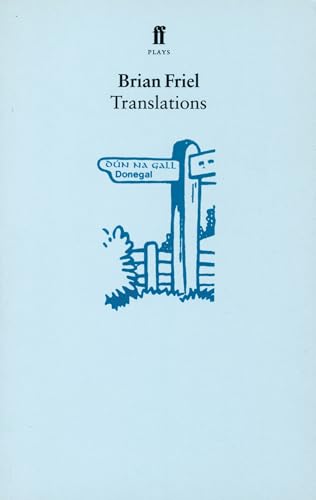
The residents of Baile Beag have little or no experience of the world beyond their village and so the abrupt invasion comes as a shock as they see their landscape and lifestyles changing at a rate that is beyond their control. Being a romantic, the scene I most vividly remember is between Maire and Yolland who fall in love - being from both Irish and English cultures, they initially struggle to express their feelings. Much like Colin Firth and Lúcia Moniz in Love Actually the intentions of Maire and Yolland are identical and ironically in-sync, yet the words spoken are different.
I really think this play is wonderful and being a play of course there is tragedy, not just the eradication of a culture, who primarily did not record their history, but also the intimate tragedies that often come to fall upon small communities where grief is magnified within the boundaries of their society.
So folks, I for one will not be celebrating St.Paddy's day by getting squiffy, I will instead curl up with a really good play and let Brian Friel take me back to a time before we imposed our harsh Anglo Saxon words on to such a beautiful language.
One of the many perks of my job is that I sometimes get sneak peaks of books that are newly released, and Love You More was one of them. I read it in two days - and considering I work full-time that meant I spent all my free time reading this book, I just couldn't put it down. It's a crime thriller based around State Trooper Tessa Leoni who arrives home after off-duty to discover her six year old daughter missing. The next morning her husband is dead on her kitchen floor and she readily admits to killing him in self-defence. It sounds like a pretty open and close case, however there are so many twists and turns in this book that I really couldn't predict the next sentence let alone the fantastic ending. It was the first novel I'd read by Lisa Gardner and I'll definitely be reading more. I did get the occasional awkward glance from other passengers though as I gasped at the tremendous speed at which this novel moves and how quickly your suspicions are flipped as you discover new traitors. A must read, really a must.
The fierce novel is primarily a memoir of a five year old, the language is simple and the nouns are delivered with childlike pride as Jack, the protagonist meticulously names, records and personifies all the objects which he encounters. Beginning with a warm description of his fifth birthday, Jack slowly but surely unveils the true nature of his little world - a four walled cell which he calls Home but in which his mother, Ma, has been a prisoner of for seven years, and which he was born into - never having once stepped into Outside.
Old Nick is the captor who snatched Ma from her college campus, leaving her parents to believe she is dead. Jack describes how Door 'beep beeps at nine when I'm supposed to be switched off ' an innocent observation which adds a horrifying dimension to this sensational tale. I cannot describe the terror I felt when I was reading about Old Nick, Emma Donoghue created such a demoniacal character that you felt a surge of dread reading the 'beep beep' of Door and knowing who was about to step onto the page.
Emma Donoghue has previously defended her novel to interviewers, explaining 'to say Room is based on the Josef Fritzl case is too strong' however as the reader it is hard not to see the similarities between Ma's ordeal and the imprisonment imposed upon Fritzl's captives. Although Donoghue did of course spend alot of time researching the impact of child-rearing in captivity and the Fritzl case obviously lended some of its horrific details to the novel, the author also claims she spent time talking to her own friends and researching their own individual methods of bringing up children, which she then implanted in Ma's mentality.
What I found most endearing about this compelling narrative was the relationship between Ma and Jack and how Ma fought her inner demons in order to protect Jack's vulnerable naivety. Often having days where she is Gone, Jack witnesses his mother's depression first hand, yet she always has the strength to carry on the next day and bring herself back from the dark abyss and into the arms of her loving son.
I found it fascinating how Jack develops a coherent vocabulary whilst living such a small life, and how, through his mother's determination, he becomes her hero running for his life and metaphorically tearing down the constrictive walls of Room.
This is a story of triumph, good over evil and right over wrong. And it was so refreshing to hear such a dark and compelling story coming from a beautifully innocent five-year-old. Jack's strong and clear voice is definitely a deliberate watermark as Emma Donoghue once said, 'who can tell his tale better than five-year-old Jack himself?'
Today I had possibly the best email ever. It was a link to an artist's website, and the artist was called Brian Dettmer. He's from Chicago and his sculptures are made from books. I don't mean that he builds towers out of books - no be cuts intricate patterns into books, staying true to their content and unveiling hidden worlds using a scalpel and tweezers. I found it mesmerising just scrolling through the gallery on his website. I can't imagine how much these cost but he exhibits his artwork throughout America and Europe so I'd imagine he's doing pretty well. The hours it must take him to work out the layers and to build up the structures are simply mind-boggling.
Here's a couple pictures of his work and do visit his website if you fancy being boggled.
Or at least I think so. Waterstone's has teamed up with Liberty of London to stock some really gorgeous new floral and iconic notebooks. I simply couldn't resist buying one on my last trip into town and it is now my new notebook for jotting down all my ideas and stories. Being a stationary nerd I find it pretty exciting and I think you should each really have one. It is nearly spring after all and spring always means new stationary!
Let the scribbling commence!